
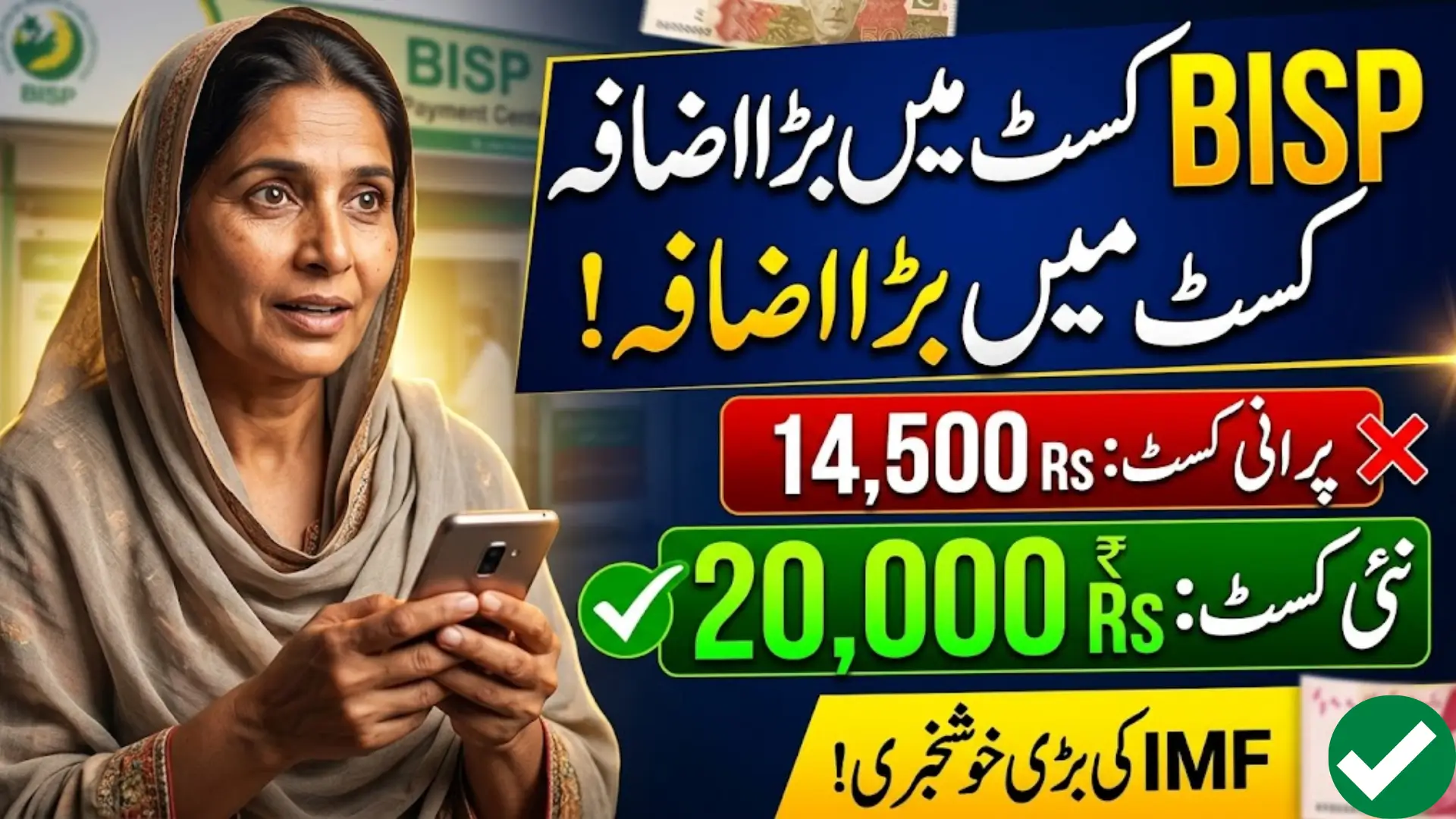
BISP Payment Increase to 20000
If you or someone in your family receives BISP Kafalat payments, this news is worth your full attention right now.
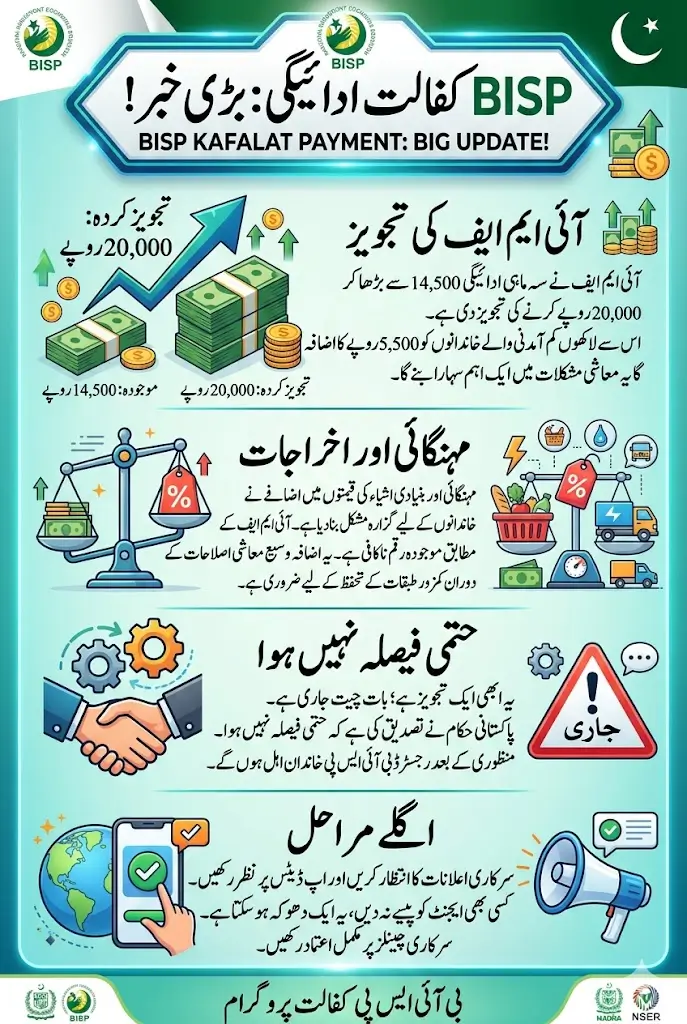
The International Monetary Fund has reportedly advised Pakistan to raise the quarterly BISP Kafalat payment from Rs. 14,500 to Rs. 20,000. That is an increase of Rs. 5,500 per quarter for millions of low-income families across the country. The proposal is part of ongoing IMF and Pakistan negotiations on fiscal reforms and social protection spending.
Now here is the important part. This has not been finalized yet. Discussions are still happening at the technical level between government officials, the IMF, and the Federal Board of Revenue. But the fact that the IMF itself is pushing for this increase says a lot about where things might be heading.
Quick Answer
The IMF has proposed increasing the BISP Kafalat quarterly payment from Rs. 14,500 to Rs. 20,000, a raise of Rs. 5,500. This proposal is currently under discussion between Pakistani authorities and IMF representatives as part of the ongoing IMF program assessment. No final decision has been made yet, but further talks are expected in the coming days.
You Can Also Read: Aghosh Program Online Check Punjab by CNIC
Quick Info
| Detail | Information |
|---|---|
| Program Name | BISP Kafalat (Benazir Income Support Programme) |
| Current Quarterly Payment | Rs. 14,500 |
| Proposed New Payment | Rs. 20,000 |
| Proposed Increase Amount | Rs. 5,500 |
| Proposed By | International Monetary Fund (IMF) |
| Current Status | Under discussion, not finalized |
| Key Institutions Involved | IMF, Government of Pakistan, FBR |
| Beneficiaries | Low-income families registered under BISP |
What Exactly Is the IMF Proposing?
The IMF has suggested that Pakistan raise its BISP Kafalat quarterly stipend from Rs. 14,500 to Rs. 20,000 as part of broader social protection reforms. The proposed hike of Rs. 5,500 is not random. It is directly linked to rising inflation and the increasing cost of living that low-income households across Pakistan are dealing with every single day. Groceries, utilities, transport, everything has gone up. The IMF’s position is that the current BISP payment no longer provides adequate support given these economic conditions.
Honestly speaking, Rs. 14,500 per quarter works out to roughly Rs. 4,833 per month. In a country where basic food and utility costs have climbed sharply over the past two years, that number barely scratches the surface for a family living on the edge.
The proposed Rs. 20,000 quarterly payment would bring the monthly effective amount to around Rs. 6,667. Still modest, but a meaningful step up for families who depend on this support entirely.
You Can Also Read: Apna Ghar Scheme 2026 Login Apply
Why Is the IMF Getting Involved in BISP?
This is a fair question, and the answer tells you a lot about where Pakistan’s economic negotiations stand right now.
Pakistan is currently under an IMF program, and part of that program involves regular reviews of fiscal policies, revenue targets, and social spending. The IMF is not just watching Pakistan cut costs. It is also pushing for targeted support systems to protect the most vulnerable households during periods of fiscal tightening.
Discussions in the current round of talks have covered three main areas:
- Social protection expenditure including BISP Kafalat payments
- Tax policy changes and rationalization of sales tax exemptions
- Revenue generation reforms at the Federal Board of Revenue (FBR)
The IMF has made it clear in these talks that reducing social welfare support while implementing broader fiscal reforms would be counterproductive. The proposed BISP increase is essentially the IMF saying: tighten where you can, but protect the poor.
Has Pakistan Agreed to the Increase?
Not yet. And this is where you need to be careful about what you read online.
Pakistani government authorities have confirmed that no final decision has been made on the proposed BISP payment increase. The discussions are still ongoing at the technical level. Both parties are working through the overall IMF program framework before any specific numbers get locked in.
The final outcome depends on:
- The overall agreement reached between Pakistan and the IMF on fiscal targets
- Revenue projections from the FBR for the coming fiscal year
- The broader social protection spending envelope agreed upon in the program
Additional rounds of negotiations are expected in the coming days. Once those wrap up, there should be clearer signals on whether the Rs. 20,000 figure gets approved as proposed, adjusted downward, or delayed.
You Can Also Read: BISP Reapply For New Registration
Who Is Eligible for BISP Kafalat Payments?
The BISP Kafalat program targets the most economically vulnerable households in Pakistan. Eligibility is determined through the National Socio-Economic Registry (NSER), which conducts surveys to identify qualifying families.
General eligibility criteria include:
- Family must fall below the poverty score threshold set by BISP
- The registered beneficiary is typically an adult woman in the household
- Families must be registered in the NSER database
- Valid CNIC issued by NADRA is required for payment collection
Payments are typically collected through designated bank branches, Easypaisa, JazzCash, or BISP payment centers located across cities and rural areas including Karachi, Lahore, Islamabad, Peshawar, Quetta, and smaller towns.
If you are already a registered BISP beneficiary, you do not need to do anything right now. Any change in payment amounts will automatically reflect in your next quarterly disbursement once officially announced.
What Does This Mean for BISP Families Right Now?
Practically speaking, nothing changes today.
The current quarterly payment remains Rs. 14,500 until an official announcement is made. Families should continue collecting payments as scheduled and should not pay any middlemen or agents who claim they can fast-track a higher payment. That is a scam. BISP payments come directly through official channels only.
But if the IMF proposal goes through and the increase is approved, here is what changes:
- Quarterly payment goes from Rs. 14,500 to Rs. 20,000
- That is an extra Rs. 5,500 every three months
- Annually, that would mean Rs. 22,000 more per year per household
For a family in a village in Khyber Pakhtunkhwa or a low-income neighborhood in Karachi, that difference can cover weeks of groceries. It is not a luxury. It is a real buffer against rising prices.
You Can Also Read: PESCO Bill Online 2026 Download Your Bill
What Happens Next?
Further rounds of IMF and Pakistan talks are expected shortly. These discussions will determine the final shape of the BISP payment revision along with other fiscal decisions.
Once the IMF program review is completed and both sides reach an agreement, the government will make an official announcement. That announcement will include the confirmed payment amount, the effective date, and the disbursement schedule.
Watch for statements from the Ministry of Finance, the BISP chairperson, and official IMF press briefings for confirmed updates.
FAQs
Q1: Has the BISP payment increase to Rs. 20,000 been confirmed?
No. As of now, the increase is a proposal put forward by the IMF during ongoing program negotiations. Pakistani authorities have confirmed that no final decision has been made. The outcome depends on the overall IMF program agreement.
Q2: What is the current BISP Kafalat payment amount?
The current BISP Kafalat quarterly payment is Rs. 14,500. This works out to approximately Rs. 4,833 per month for registered beneficiaries.
Q3: How much will BISP payment increase if the proposal is approved?
The IMF has proposed an increase of Rs. 5,500 per quarter, raising the payment from Rs. 14,500 to Rs. 20,000. This would bring the effective monthly support to around Rs. 6,667.
Q4: Who is eligible for the BISP Kafalat payment increase?
All currently registered BISP Kafalat beneficiaries would be eligible if the increase is approved. Eligibility is based on NSER poverty scoring and NADRA registration. No separate application is required for existing beneficiaries.
Q5: When will the new BISP payment amount be implemented?
There is no confirmed date yet. The timeline depends on when the IMF and Pakistani government finalize their program review discussions. Further negotiations are expected in the coming days.
Q6: How can I check if I am a registered BISP beneficiary?
You can check your BISP registration status by sending your CNIC number via SMS to 8171, visiting the official BISP website, or going to your nearest BISP payment center. NADRA offices can also assist with verification.
Q7: Is the IMF proposal for BISP increase connected to other economic reforms?
Yes. The proposed BISP increase is part of a broader package of fiscal reforms being discussed between Pakistan and the IMF. These discussions also include tax policy changes, sales tax exemption rationalization, and FBR revenue reforms. The social protection increase is being proposed alongside, not separately from, these broader fiscal decisions.
You Can Also Read: 8171 Web Portal 2026 To Verify 14500 Payment
Conclusion
The IMF pushing for a BISP payment increase is a meaningful signal, even if nothing is confirmed yet. It shows that social protection is part of the conversation at the highest levels of Pakistan’s economic negotiations, not an afterthought.
Whether the Rs. 20,000 figure survives the final rounds of talks or gets adjusted, millions of families across Pakistan are watching closely. The next few days of negotiations will tell us a lot.
Keep an eye on official statements from the Ministry of Finance and BISP for any confirmed updates on the new payment schedule.