
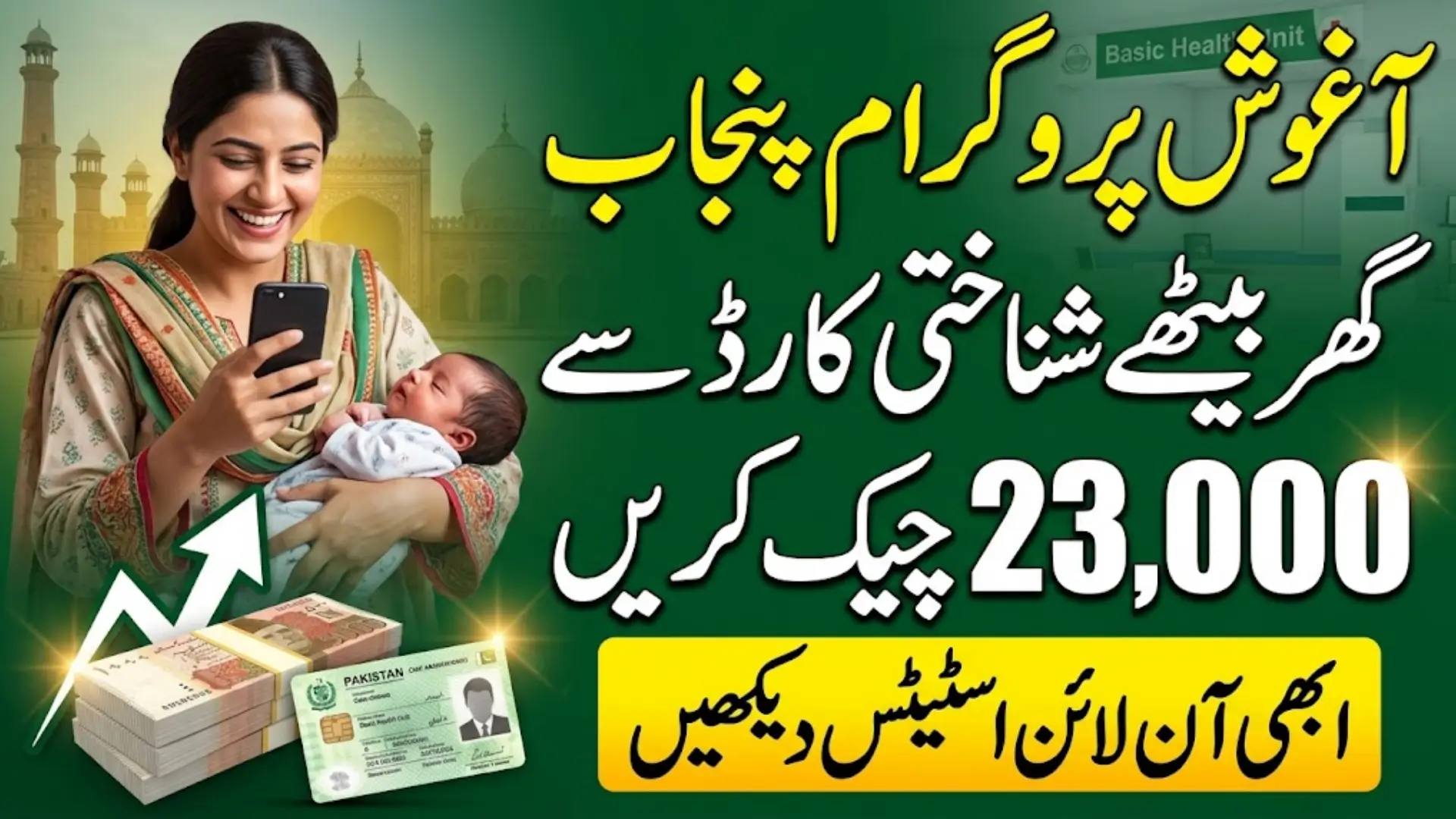
Aghosh Program Online Check Punjab by CNIC
Aghosh Program Online Check Punjab by CNIC Access to proper healthcare during pregnancy is still one of the biggest challenges for thousands of families across Pakistan. In many villages and low-income urban areas of Punjab, women often skip regular medical checkups because they simply cannot afford transportation, medicines, tests, or hospital expenses. As a result, health complications during pregnancy continue to increase, especially among poor families who already struggle with rising inflation and daily household expenses.
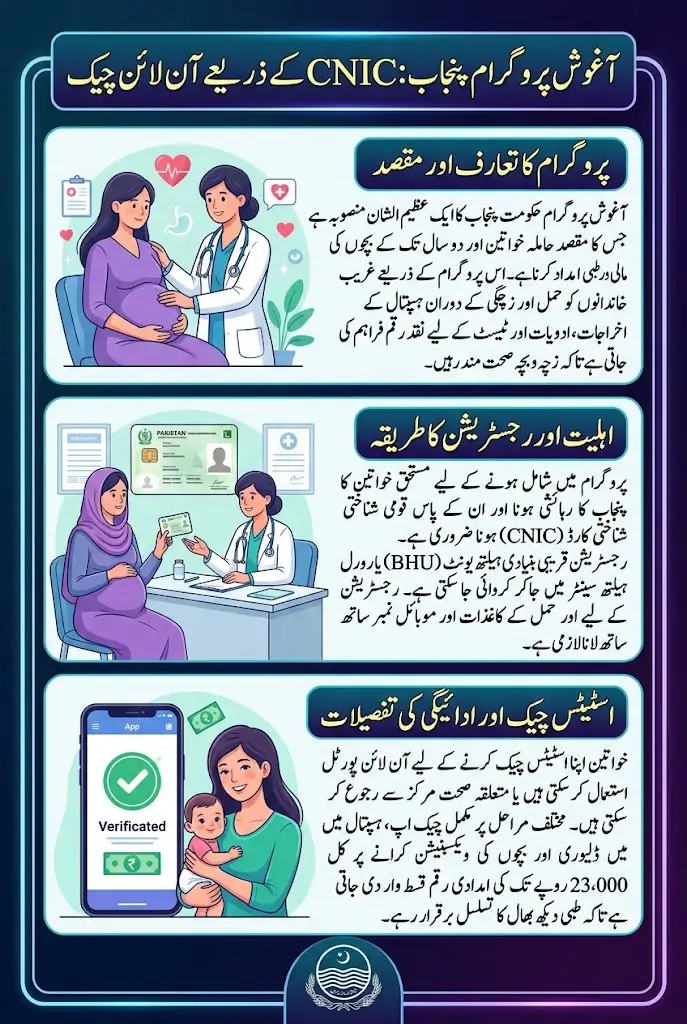
To reduce these problems, the Punjab Government introduced the Aghosh Program, a healthcare-based financial assistance scheme for pregnant women and mothers with young children. Unlike ordinary welfare programs, this scheme is directly connected with medical treatment, pregnancy checkups, child healthcare, and hospital visits. The goal is not only to provide cash support but also to encourage women to continue proper medical care throughout pregnancy and after childbirth.
Over the past few months, many people across Punjab have started searching online for terms like Aghosh Program Online Check by CNIC “Aghosh Program Registration”, “Punjab Aghosh Program Payment”, and “How to Check Aghosh Program Eligibility”. However, many families still do not fully understand how the system works, how payments are released, or where they can verify their status.
This complete guide explains everything step by step in simple and human language so that even ordinary citizens from rural areas can understand the process easily without confusion.
You Can Also Read: Apna Ghar Scheme 2026 Login Apply
What Is the Aghosh Program Punjab?
The Aghosh Program is a maternal and child healthcare support initiative launched under the Punjab healthcare system to assist deserving women during pregnancy and early motherhood. The program mainly targets low-income households where women cannot manage healthcare expenses on their own. Instead of giving one-time aid, the government designed this scheme in a way that encourages continuous medical treatment and regular hospital visits.
In many districts of Punjab, health officials noticed that pregnant women often avoided hospitals because of financial pressure. Some families only visited hospitals when conditions became serious. This delay increased risks for both mothers and newborn babies. The Aghosh Program was created to change this situation by linking financial assistance with medical checkups and healthcare participation.
Under this initiative, women receive installment-based payments after completing certain healthcare activities. This means beneficiaries are encouraged to continue doctor visits, vaccination schedules, and child healthcare appointments regularly.
The program mainly focuses on:
- Pregnant women from poor families
- Mothers with children under 2 years of age
- Women living in selected Punjab districts
- Families registered through government health centers
- Women with valid CNIC records
For many families in remote villages, this scheme has become an important support system during difficult times.
You Can Also Read: BISP Reapply For New Registration
Why the Aghosh Program Is Important for Pakistani Families
Healthcare expenses during pregnancy can become a huge burden for poor families. In several rural areas of Punjab, women travel long distances to reach hospitals or Basic Health Units (BHUs). Even transportation costs become difficult for daily wage earners and laborers. Because of this, many women miss important pregnancy checkups and medical advice.
Doctors working in public hospitals often explain that regular pregnancy monitoring can prevent serious complications. However, awareness alone is not enough when families cannot afford treatment expenses. The Aghosh Program addresses this issue by combining healthcare with financial assistance.
This initiative is helping families in several ways:
- Encouraging women to visit hospitals regularly
- Promoting safer deliveries at healthcare centers
- Improving child vaccination awareness
- Reducing pregnancy-related health risks
- Supporting poor households financially
- Helping mothers continue treatment after childbirth
Health workers in many districts have observed that after the launch of the program, the number of women visiting health centers increased noticeably. Families who previously ignored medical treatment are now taking pregnancy care more seriously because financial assistance is connected with healthcare participation.
You Can Also Read: PESCO Bill Online 2026 Download Your Bill
Who Can Apply for the Aghosh Program?
One important thing people should understand is that this scheme is not for everyone. The Punjab Government specifically designed it for deserving women who meet certain eligibility conditions. The program mainly targets poor and vulnerable families who genuinely need healthcare assistance during pregnancy and child care.
Women who belong to the following categories may qualify for the scheme:
- Pregnant women
- Mothers with children below 2 years
- Women from low-income households
- Residents of selected Punjab districts
- Women holding valid CNICs
In many villages, local healthcare workers and lady health visitors help women understand the registration process. They also guide families regarding required documents and health visits.
The government’s main objective is not only to provide money but to improve maternal and child healthcare standards in Punjab. Because of this, women are required to continue medical visits regularly to remain eligible for payments.
Complete Eligibility Criteria for Aghosh Program
Before applying for the scheme, families should understand the complete eligibility conditions properly. Many applicants face delays because they do not fulfill the required healthcare conditions or submit incomplete information.
Residential Eligibility
Applicants must fulfill these location requirements:
- Must be a resident of Punjab
- Must belong to districts included in the scheme
- Must visit registered government healthcare centers
Some areas may still have limited program coverage, especially remote districts where services are expanding gradually.
Health-Related Requirements
The program strongly focuses on medical compliance. Women must continue regular treatment and attend healthcare visits as instructed by doctors or health staff.
Required healthcare activities include:
- Pregnancy checkups
- Follow-up medical visits
- Child health monitoring
- Vaccination appointments
- Delivery-related healthcare visits
Missing multiple visits may affect payment approval or delay installments.
Identity Verification Conditions
Applicants should also ensure:
- CNIC information is correct
- Personal records match official data
- Mobile number is active
- Family information is accurate
Incorrect information often creates verification problems during registration or payment processing.
You Can Also Read: 8171 Web Portal 2026 To Verify 14500 Payment
Aghosh Program Online Check by CNIC – Full Step-by-Step Process
Many people now prefer online verification instead of repeatedly visiting offices and health centers. The CNIC checking process is designed to help beneficiaries confirm their eligibility and payment status more easily.
The process is simple if online services are available in your district.
Step 1 – Visit the Official Portal
Open the official Punjab health-related portal or the webpage connected with the Aghosh Program services. Always use trusted government platforms to avoid scams or fake websites.
Before checking your status:
- Use a stable internet connection
- Keep your original CNIC nearby
- Use your own mobile device if possible
Many people face problems because they enter incorrect details while using public internet shops.
Step 2 – Enter Your CNIC Number
Carefully type your CNIC number without spaces or dashes. Even a small mistake can prevent the system from showing correct results.
Always double-check:
- CNIC digits
- Spelling of names
- Registered mobile information
Typing errors are one of the most common reasons why applications fail to appear online.
Step 3 – Submit Your Information
After entering your CNIC:
- Click the “Check Status” option
- Wait a few seconds for verification
- Review your eligibility details
- Check payment or registration status
If the portal becomes slow, try again later because government systems often experience heavy traffic.
Step 4 – Verify Your Payment Details
Approved beneficiaries may also see information related to:
- Registration confirmation
- Installment status
- Healthcare verification
- Pending visits
- Payment processing updates
Online verification is especially useful for urban users who have stable internet access.
You Can Also Read: WhatsApp Incognito Mode Meta AI
Offline Verification Method for Rural Areas
Although online systems are becoming more common, many villages in Punjab still rely heavily on manual verification methods. In several rural districts, offline verification through BHUs and Rural Health Centers remains more reliable than online checking.
Women can visit:
- Basic Health Units (BHUs)
- Rural Health Centers
- Government maternity hospitals
- Public healthcare facilities
During the visit, staff members usually request:
- Original CNIC
- Pregnancy medical records
- Child health documents
- Registration details
Health workers then manually verify the beneficiary status through official records.
Many women prefer this method because healthcare staff also guide them about upcoming checkups, payments, and treatment schedules.
Also Read: CM Punjab Rahmat Card Application Deadline Announces Know How to Apply And Track Status Online
How to Register for the Aghosh Program
Registration for the Aghosh Program is usually completed physically through government healthcare facilities rather than through online forms. This system helps authorities confirm medical conditions and verify records properly before approving applicants.
Most women are registered during pregnancy visits at nearby health centers.
Documents Required for Registration
Applicants generally need:
- Original CNIC
- Active mobile number
- Pregnancy confirmation records
- Child birth or vaccination documents
- Family information details
Carrying photocopies of documents can save time during registration.
Registration Procedure Step By Step
The normal registration process includes:
- Visit nearest BHU or Rural Health Center
- Meet healthcare staff for verification
- Submit required documents
- Complete medical examination if required
- Enter information into the official system
- Receive registration confirmation
After successful enrollment, beneficiaries become eligible for installment-based healthcare assistance.
Aghosh Program Payment Details and Installment Structure
One of the most searched questions online is related to Aghosh Program payments. Many women want to know how much assistance they can receive and when installments are released.
The payment system works in stages instead of one-time distribution. Each installment is connected with healthcare participation and medical attendance.
| Stage | Required Activity | Payment Purpose |
|---|---|---|
| Registration | Enrollment at BHU or Health Center | Initial Support |
| First Medical Visit | Pregnancy Checkup | Healthcare Assistance |
| Follow-Up Visits | Continued Medical Monitoring | Additional Installments |
| Delivery Stage | Safe Hospital Delivery | Maternal Support |
| Child Healthcare | Vaccination & Child Checkups | Final Assistance |
The total financial support may reach around PKR 23,000 depending on participation and completion of required healthcare visits.
This installment-based structure encourages families to remain connected with healthcare services throughout pregnancy and early motherhood.
Real-Life Impact of the Aghosh Program
Healthcare workers across Punjab have shared many examples showing how the program is helping poor families. In villages where women previously avoided hospitals because of expenses, many are now attending regular checkups after learning about financial assistance.
For example, a pregnant woman from a low-income household may:
- Register at a nearby BHU
- Receive initial financial assistance
- Attend regular pregnancy checkups
- Continue doctor visits during pregnancy
- Deliver safely at a healthcare center
- Receive child healthcare support after birth
This process improves both maternal health and child safety while also reducing financial pressure on families.
Many doctors believe that long-term healthcare awareness created through such programs can improve overall public health conditions in rural communities.
Common Problems During CNIC Check and Their Solutions
Although the system is helpful, beneficiaries sometimes face technical or verification issues. Understanding common problems can help families solve issues more quickly.
CNIC Status Not Showing Online
This usually happens because of:
- Incorrect CNIC entry
- Internet connection problems
- Server traffic issues
- Delayed data updates
Possible solutions include:
- Rechecking the CNIC number
- Trying again later
- Visiting BHU for manual verification
Marked as Ineligible
Some women are marked ineligible due to:
- Incomplete medical visits
- Incorrect records
- District not included in the program
- Verification mismatch
In such cases, applicants should contact healthcare staff immediately.
Delayed Installments
Payment delays may happen because:
- Attendance verification is pending
- Health visits are incomplete
- System updates are delayed
Women should continue regular medical visits even if payments are temporarily delayed.
Important Tips to Receive Payments Without Problems
Many beneficiaries unintentionally create problems by skipping healthcare visits or failing to update records. Following a few practical steps can make the process smoother.
Useful tips for applicants include:
- Always use your original CNIC
- Attend every scheduled checkup
- Keep medical slips safe
- Stay connected with local health staff
- Update incorrect information quickly
- Follow vaccination schedules properly
- Confirm attendance after every visit
Families who remain active in the healthcare process usually face fewer payment issues.
Benefits of the Aghosh Program for Mothers and Children
The real success of the Aghosh Program is not only financial assistance. Its biggest achievement is encouraging better healthcare practices among poor families who previously avoided hospitals due to expenses.
Major benefits include:
- Better pregnancy monitoring
- Safer childbirth procedures
- Improved child healthcare awareness
- Increased vaccination participation
- Reduced maternal health risks
- Financial relief during pregnancy
- Better healthcare connection in rural areas
Doctors and healthcare experts believe that programs like this can play a major role in reducing preventable health complications in Punjab.
Difference Between Aghosh Program and Other Welfare Schemes
Many people compare the Aghosh Program with programs like BISP or general cash assistance schemes. However, there is a major difference between them.
The Aghosh Program is healthcare-linked. Payments depend on medical participation and treatment continuity instead of only financial eligibility.
Important differences include:
- Focus on maternal healthcare
- Child wellness monitoring
- Hospital visit requirements
- Installment-based payments
- Pregnancy and vaccination tracking
This makes the scheme more effective in improving long-term health conditions for mothers and children.
Frequently Asked Questions
Can I register online for the Aghosh Program?
No, registration is usually completed through government health centers and BHUs.
How can I check my Aghosh Program status by CNIC?
You can check online where digital services are available or visit your nearest healthcare center for manual verification.
Is the program available in all districts of Punjab?
The scheme is expanding gradually, so availability may vary by district.
How much assistance does the program provide?
Eligible beneficiaries may receive support up to approximately PKR 23,000 depending on completed healthcare visits.
What happens if I miss medical checkups?
Missing checkups may delay or stop installment payments.
Can women already receiving BISP apply?
In many cases yes, but eligibility depends on official verification and program rules.
Final Thoughts
The Aghosh Program Punjab is one of the most important healthcare support initiatives introduced for poor and deserving women in recent years. In many areas where families struggle to manage even basic pregnancy expenses, this scheme provides both financial assistance and healthcare motivation.
Its biggest strength is that it encourages continuous medical care instead of temporary support. Women who attend regular checkups, stay connected with health centers, and follow treatment schedules can benefit greatly from this initiative